
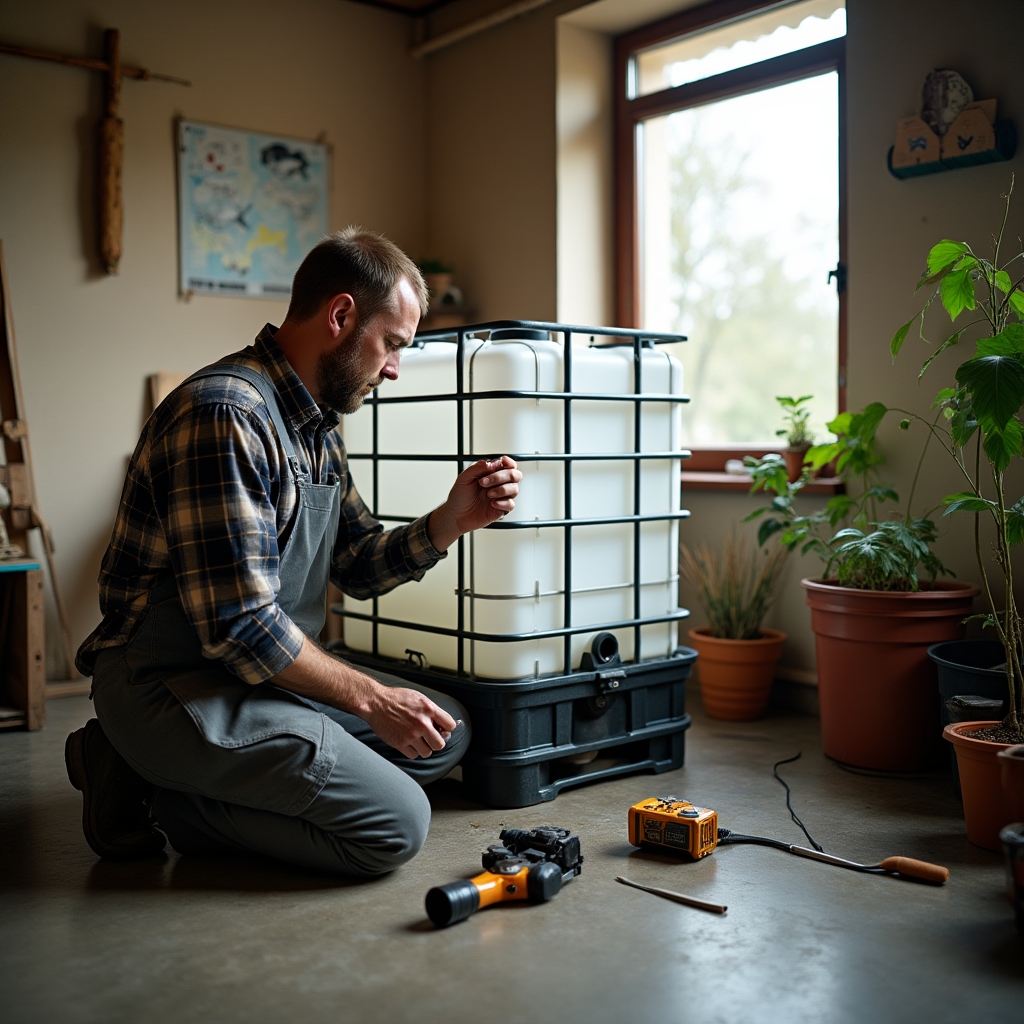
Cutting and Plumbing the IBC Tote
A week-by-week account of turning a used one-thousand-litre tote into a working fish tank, including the plumbing mistakes worth avoiding.
Documented garage to harvest crate
This blog tracks one closed-loop aquaponic system, month by month, through Polish winters and summers. Fish species, growth rates, electricity draw, feed costs and where the harvest actually gets sold, all logged in PLN. No starter kits, no live fish, nothing offered for sale here. Just the documentation.
Aquaponics couples two familiar practices into one system. Fish live in a tank. Their waste, mostly ammonia, is converted by colonies of nitrifying bacteria into nitrates. Those nitrates become the primary nutrient feed for vegetables grown without soil, usually in gravel beds or floating rafts.
Water moves in one direction through the loop and returns filtered to the fish tank. No fertilizer added, no soil to manage, and the fish water gets scrubbed clean by the roots doing the work a filter would otherwise need to do.
It sounds simple on paper.
In practice, a Polish garage in January behaves nothing like a demonstration tank in a warm greenhouse. Insulation, pump sizing, heating cycles and bacterial colony stability all interact, and most of what gets published on this site started as a mistake worth writing down.
Electricity readings, feed bags, seedling trays and replacement parts are logged monthly, with receipts kept, so figures reflect an actual system rather than a rough estimate.
Nothing here is a storefront. The site exists to publish findings from one household project, not to sell equipment, livestock or consulting services.
Pump failures, a lost batch of pak choi to root rot, an underestimated heating bill in February. The setbacks get written up alongside the parts that worked.
Notes on which markets, co-ops and neighbours actually took surplus greens and fish, and what that meant for a small household in Szczecin.
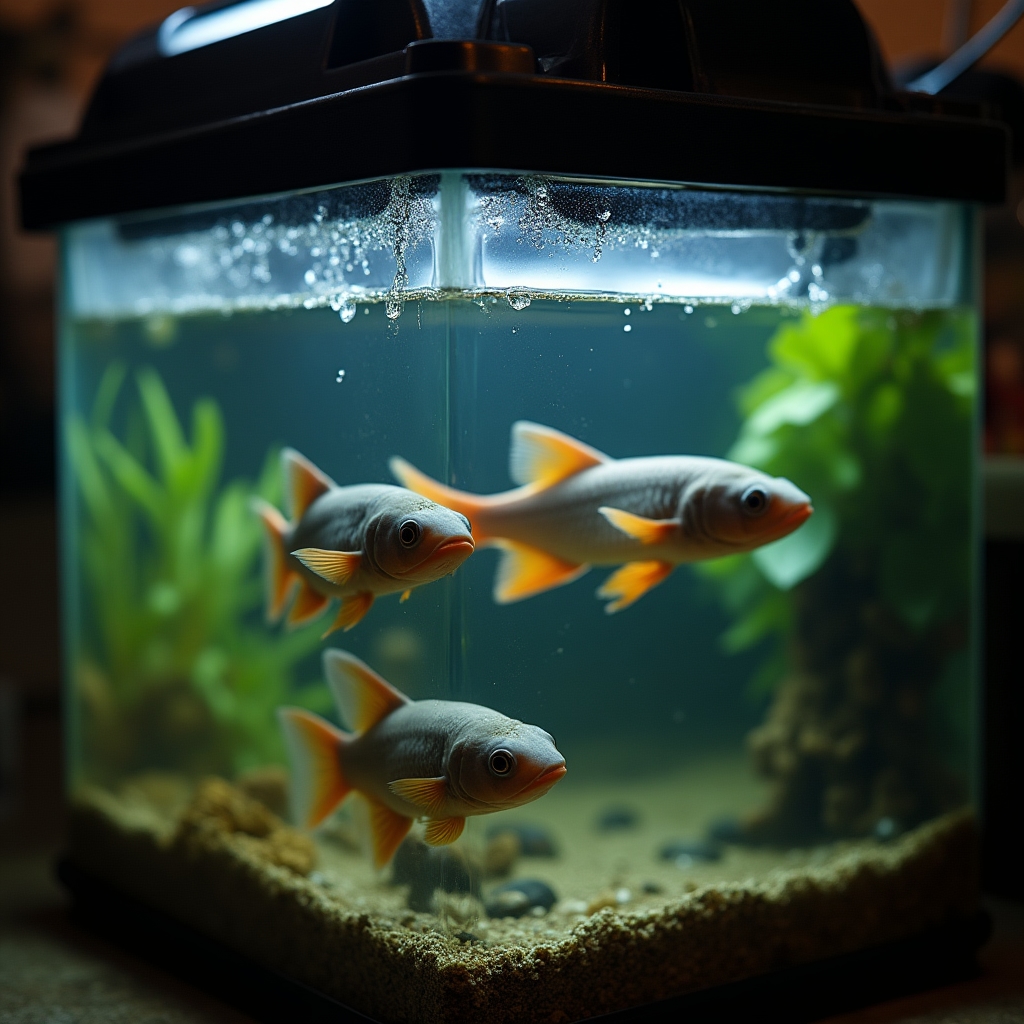
Indoor temperatures in an uninsulated garage swing hard between January and July. That range rules out a lot of species people associate with home aquaponics, and rewards a short list of hardier ones.
Growth speed in an aquaponic raft or media bed depends on nutrient concentration, light hours and water temperature, and varies between batches. The figures below come from repeated sowings in the same system, not a single trial.
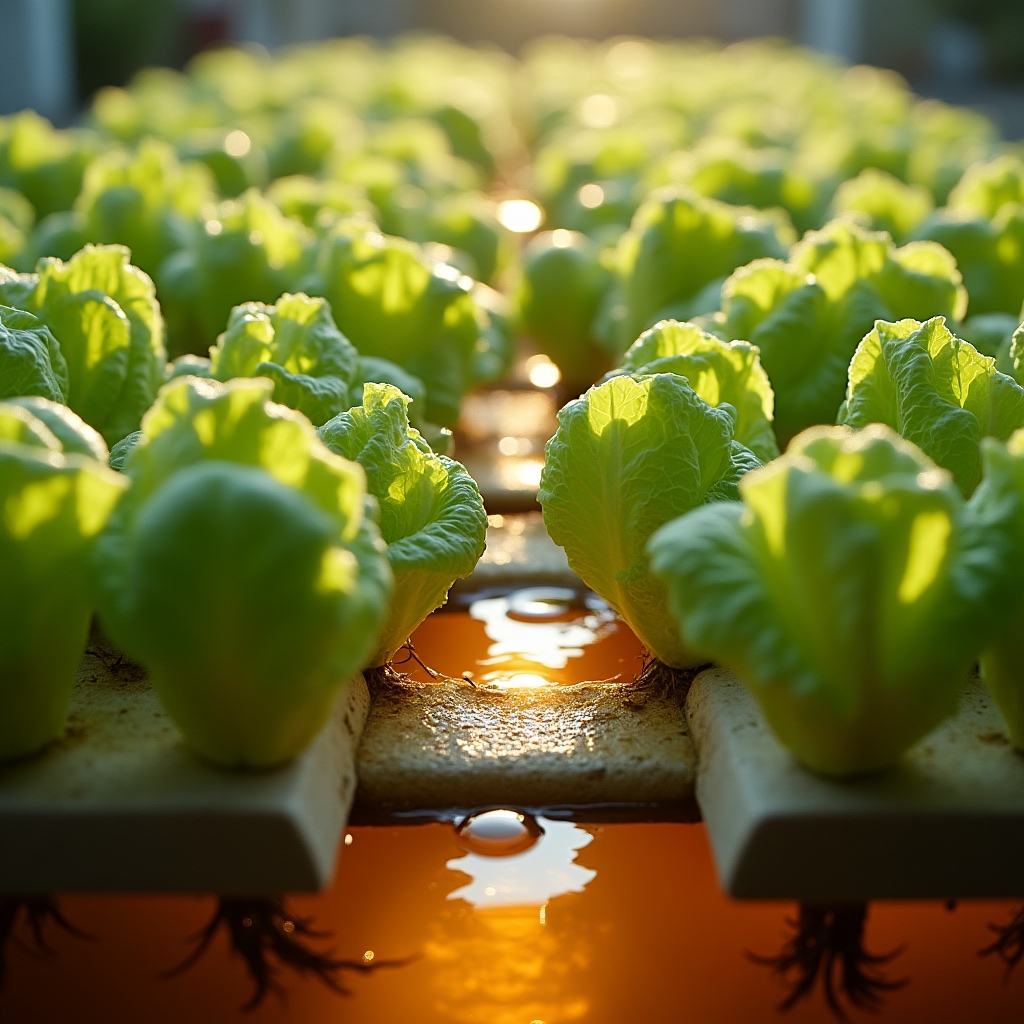
Around 30 to 35 days from transplant to harvest size in this system, fairly forgiving of nutrient swings.
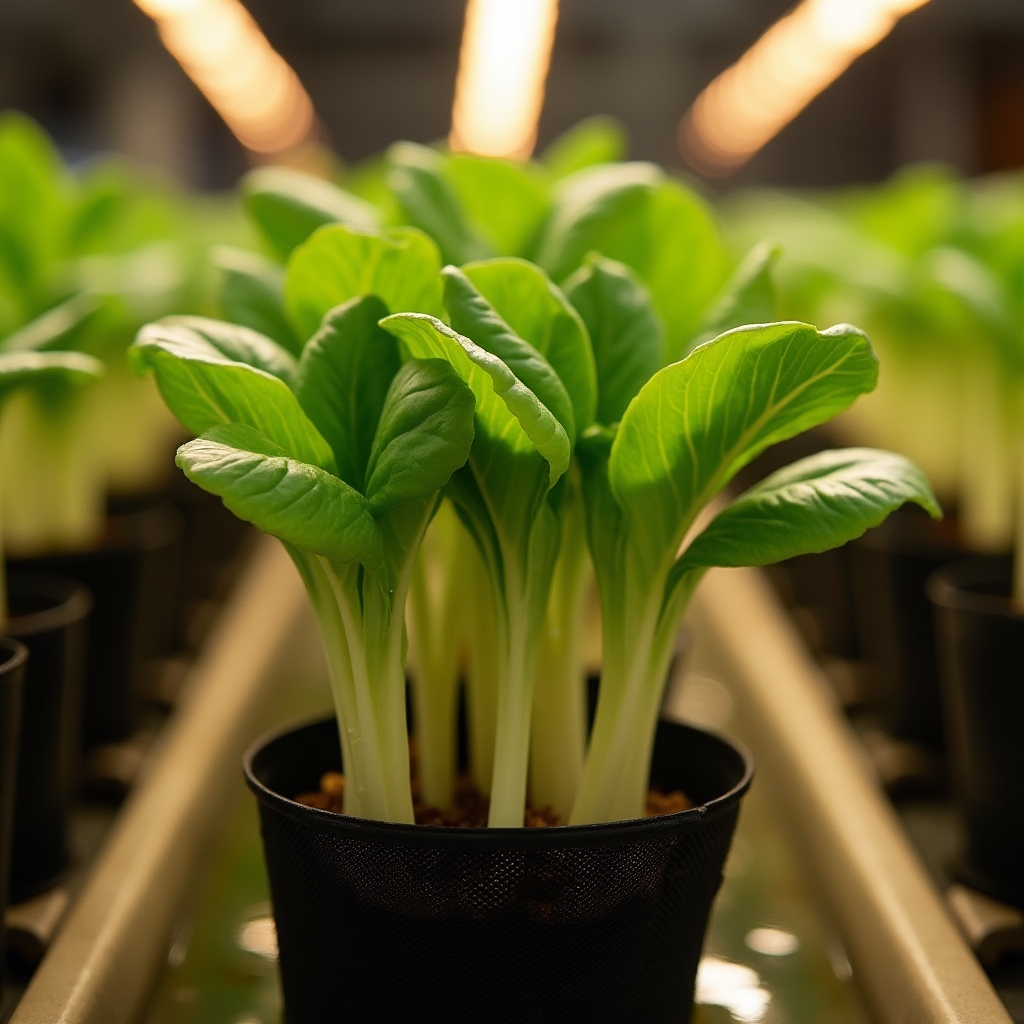
Roughly 25 to 28 days. Responds quickly to higher nitrate levels, one of the more predictable crops logged so far.
About 21 to 24 days for baby leaf size. Peppery flavour intensifies with cooler water temperatures.
Often the fastest, 18 to 21 days, but it needs continuous flow and struggles if the pump cycle stalls.
Close to pak choi, around 24 days, with a milder mustard note and good tolerance for lower light.
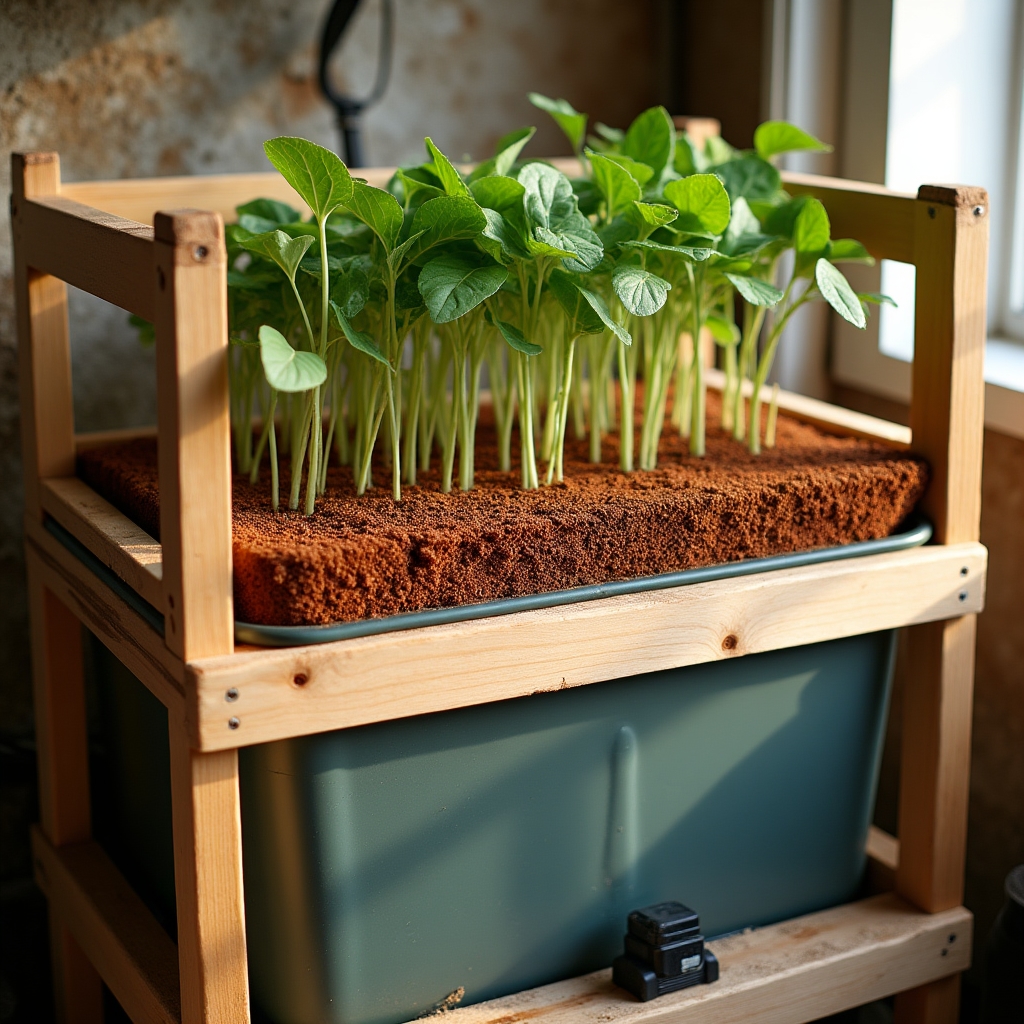
The tank at the centre of this whole project began as a single food-grade one-thousand-litre IBC tote, the kind used to ship liquids on pallets. Four stages turned it into a working system.
Full parts lists, photos and the plumbing diagram used for this specific build are on the Installation Gallery page.
Costs shift with the season, mainly because of heating and grow-light hours, but the logged categories stay consistent.
Figures come from logged utility bills and receipts across one household system in Szczecin. They are not projections for any other setup and will vary with tank size, insulation and local electricity tariffs.
A garage system this size rarely produces enough to justify a market stall on its own, but several smaller routes have worked, each documented as it was tried.
Weekend farmers markets in Szczecin accept small-batch greens from registered home producers on a case-by-case basis. A short-run neighbour subscription, a standing box of greens dropped off weekly, covered feed costs during the trial months without needing a formal storefront. A couple of small grocery co-ops expressed interest in hyper-local greens but wanted consistent weekly volume the system could not yet guarantee.
Selling food commercially in Poland, even at small scale, involves registration considerations such as rolniczy handel detaliczny for direct farm sales. This blog does not offer legal or tax advice; it only reports what routes were explored and what came of them.
A week-by-week account of turning a used one-thousand-litre tote into a working fish tank, including the plumbing mistakes worth avoiding.
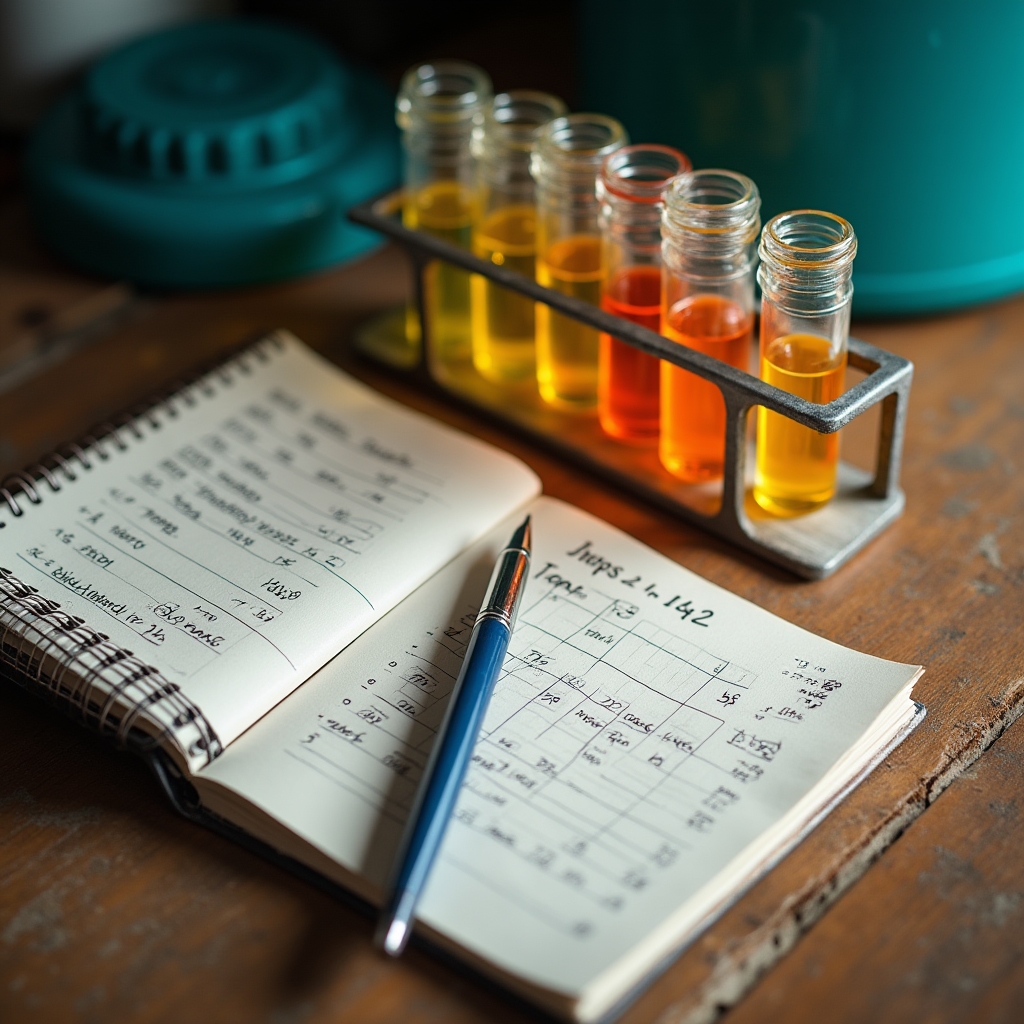
Heating a fish tank through a Polish winter changes the electricity bill more than most other single factor in the system.
Notes from a first attempt at a Szczecin farmers market: what sold, what did not, and what the stall fee actually cost.
Nothing on this site is offered for sale. No starter kits, no live fish, no paid consulting. The goal is a public, honest record of one closed-loop system, its costs in PLN, and whether small-scale aquaponics holds up as a plausible urban micro-business under Polish conditions. Questions about the method are welcome through the contact page.
Get in touch
The tote arrived on a pallet from a chemical distributor, cleaned but smelling faintly of whatever it once carried. A week of airing it out in the garage with the cap open dealt with that. Cutting the top removed the lid ring and left a stable rim for a grow bed frame.
Plumbing turned out to be the part most worth slowing down for. A bulkhead fitting near the base feeds the pump chamber, and a bell siphon in the grow bed handles flood-and-drain cycles without needing a separate timer relay. The first attempt used fittings rated for a lower flow than the pump actually pushed, and a slow leak went unnoticed for four days before it showed up as a two-centimetre drop in tank level.
Total parts for the plumbing and stand came to roughly 640 zł, on top of the tote itself, sourced secondhand for 150 zł.
From October through March, the heater ran far more than the pump or the grow lights combined. A 300-watt aquarium heater cycling to hold the tank above 20°C added an estimated 90 to 140 zł to the monthly bill depending on how cold the garage got overnight.
Switching the grow lights to a timed schedule of fourteen hours instead of running them continuously cut roughly 25 zł off the February bill without any visible change in growth rate for the pak choi in that cycle.
The full monthly breakdown, with meter readings, is kept in a spreadsheet linked from the Installation Gallery page.
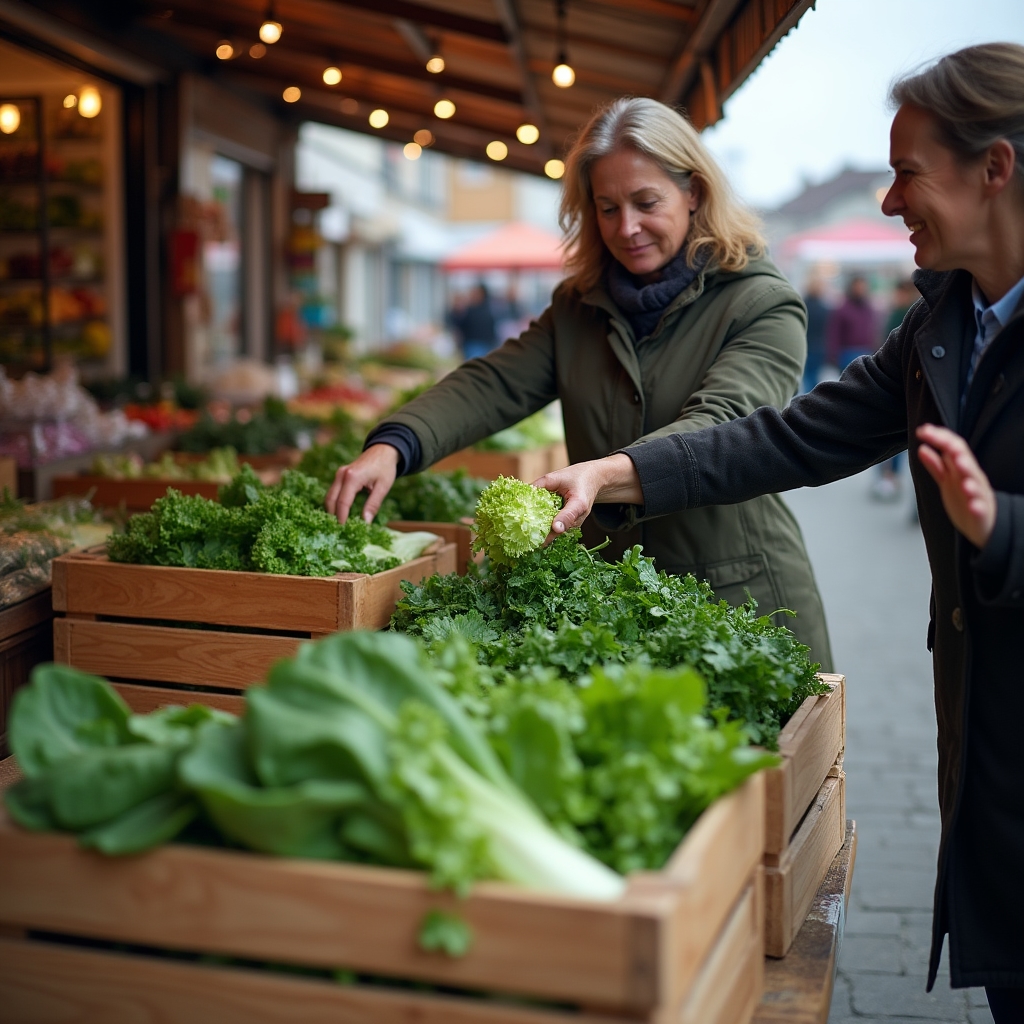
A single Saturday stall at a Szczecin neighbourhood market cost 40 zł for the table space. Lettuce and pak choi sold reasonably well by early afternoon, arugula moved slower, likely because fewer shoppers recognised it on sight.
Total sales for that first Saturday came to around 210 zł, against the 40 zł stall fee and roughly two hours of setup and teardown. It covered that week's feed cost with a modest margin left over, though a single Saturday is not enough data to draw firm conclusions about viability.
A second attempt the following month, with clearer signage naming the vegetables, produced a noticeably better result for the arugula specifically.